The short answer
The best season for powerful surf is not automatically the best season for your first lesson.
Start with your level, then choose the season
For Morocco’s Atlantic coast, autumn and winter are widely associated with the stronger North Atlantic swell season. Surfline identifies the northern winter, with adjoining autumn and early spring months, as a prime window for surf travel. That is a broad seasonal pattern, not a forecast for a particular week.
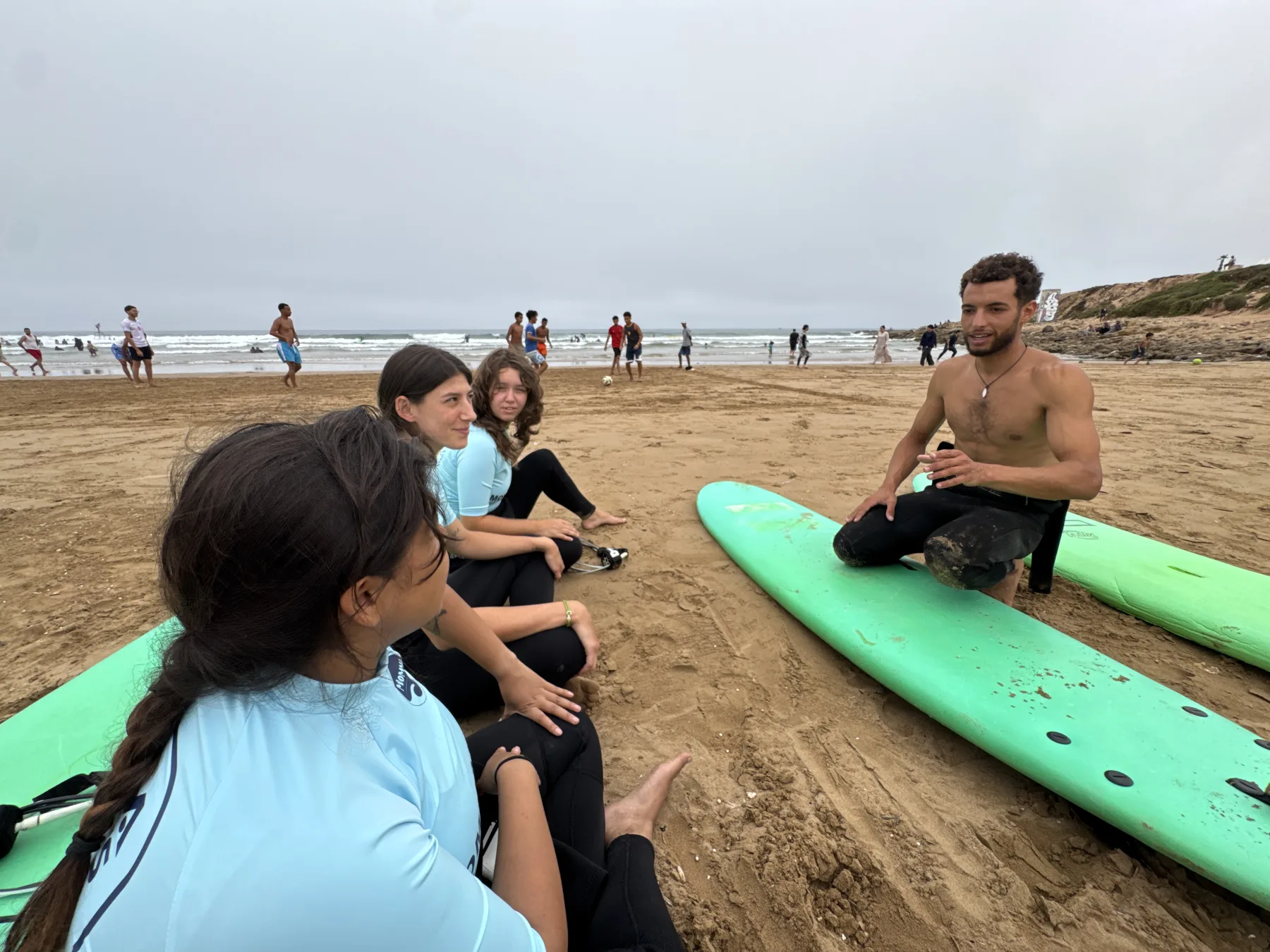
If you are learning, your priority is a manageable session with suitable instruction. If you already surf independently, your priorities may be different: wave shape, size and consistency. Tell the school what you can actually do in the water rather than choosing only a label such as “intermediate”.
Autumn and winter: prepare for more energy
A swell-focused trip may make sense during this period, but leave room for unsuitable days. Bigger conditions can restrict options rather than improve them for a learner. Do not choose a famous point break simply because you have seen photographs of it working well.
Ask how sessions are organised when the surf is beyond your level. Build your travel plan around realistic progress and recovery, with enough flexibility to change the day’s plan after a local assessment.
Spring and summer: check what is actually available
Outside the main winter swell window, a surf holiday can still be worth discussing. However, smaller-looking conditions are not automatically safe, and a booking should never rely on an assumption that there will be perfect beginner waves every morning.
Ask about recent conditions, lesson availability and the type of sessions that are realistic for your dates. If surfing is one part of a broader holiday, a flexible stay may suit you better than an itinerary built around a fixed wave expectation.
What to ask before choosing dates
Share your preferred travel window and a second option if you have one. Explain whether you are a complete beginner, catching unbroken waves with help, or surfing independently. Ask how many sessions are proposed and what happens if conditions change.
Confirm wetsuit and board availability rather than buying equipment from a generic seasonal packing list. Your comfort depends on the actual water and weather, session length and personal tolerance. Bring sun protection, a towel, a warm layer for after surfing and any medication you need.
Use forecasts at the right time
Use the seasonal pattern for early planning, then revisit the forecast closer to your trip. A long-range chart is a possibility, not a booking guarantee. Before each session, the actual beach assessment matters more than a calendar or an attractive forecast rating.
Our recommendation: book for the experience you want, communicate your level clearly and keep the ocean part of your schedule flexible. Read our forecast guide next to understand which numbers deserve your attention.
Sources & further reading
General education, not a live forecast or a substitute for local instruction. Conditions, access and availability can change.
Planning your Anza trip?
Share your dates and surf experience. Let’s find an option that makes sense for you.
Ask Momma Surfs ↗