The short answer
Wind creates wave energy. The coastline and seabed help shape what finally breaks at the beach.
The wave begins before it reaches the beach
Wind transfers energy into the water. Wind strength, how long it blows and the distance it blows over open water all influence the waves it produces. Some wave energy travels away from the weather that generated it and reaches distant coasts as swell.
A useful distinction is energy versus travelling water. In the open ocean, a wave mainly passes energy onward; it is not a single wall of water making the entire journey from the storm to Morocco.
Why a wave finally breaks
As a wave reaches shallower water, interaction with the seabed changes its motion and shape. It can become steeper until the crest breaks. Different seabed slopes and wave conditions help produce different breaking forms.
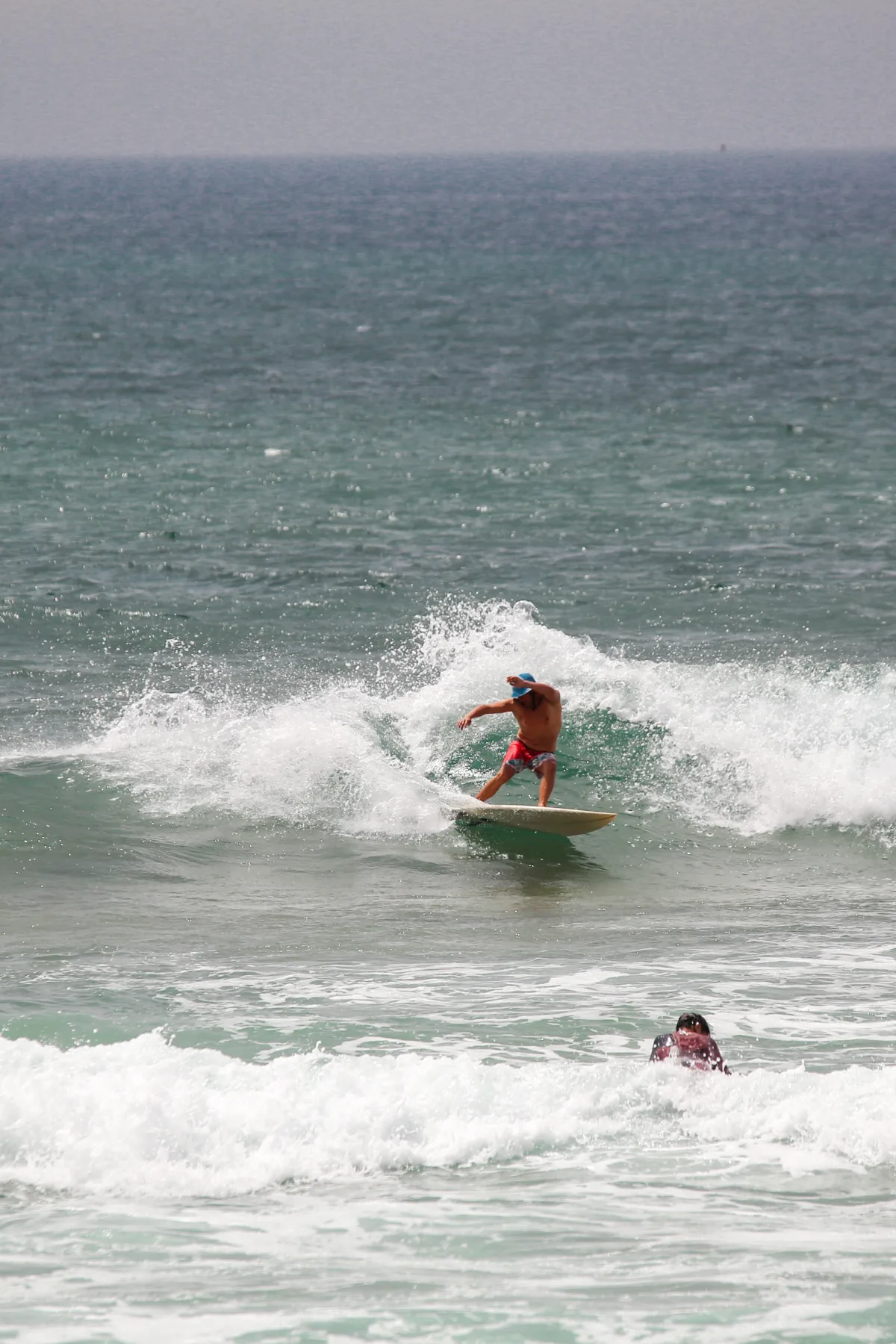
This is why the same incoming swell can look different at nearby sections of coast. A photograph of a beautiful wave tells you little about the depth beneath it, the current beside it or how difficult it is to exit.
Beach, point and reef: useful descriptions, not safety ratings
A beach break describes waves breaking over a sandy bottom. A point break describes a wave peeling along a projecting section of coast. A reef break breaks over a relatively fixed reef or rocky bottom. Real coastlines are varied, and these simple categories do not capture every detail.
Do not turn these labels into rules such as “sand is always safe” or “a long wave is easy”. Changing banks, currents, shallow water and crowded take-off zones can make a seemingly approachable wave demanding.
White water and unbroken waves are different learning environments
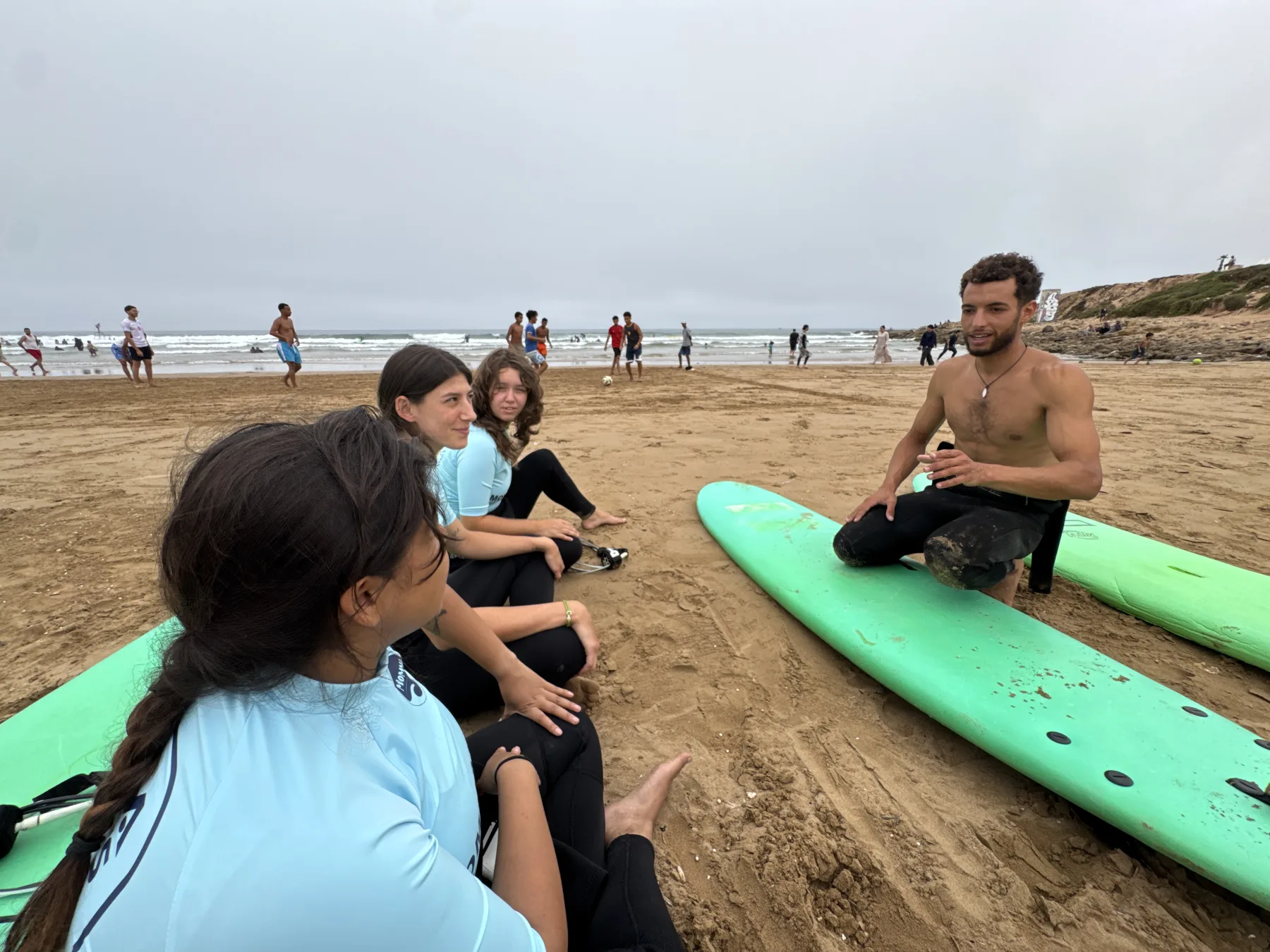
Broken waves let an instructor introduce board control, timing and standing without immediately adding all the decisions needed in a lineup. Catching an unbroken wave adds positioning, direction, speed and awareness of other surfers.
Progress is not only standing up. Being able to control your board, follow a plan and recognise when you are out of your depth matters too. Tell your coach which parts feel comfortable and which still feel uncertain.
Learn to watch before you surf
Spend time observing with your instructor. Where do waves begin breaking? Are they peeling along or closing across a section? Where are other people entering and leaving? Is the session area changing with the tide?
Use those observations to ask better questions, not to self-certify a spot as safe. A coach can connect what you see with a suitable practice area and explain why the plan may be different tomorrow.
Sources & further reading
General education, not a live forecast or a substitute for local instruction. Conditions, access and availability can change.
Planning your Anza trip?
Share your dates and surf experience. Let’s find an option that makes sense for you.
Ask Momma Surfs ↗